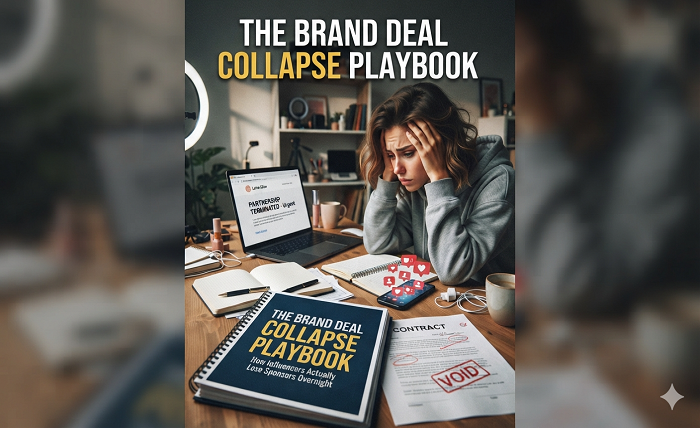
A creator says something in a livestream, or an old tweet resurfaces, or a brand safety team flags a partnership post at 2am, and by breakfast the deal that funded someone’s entire year is gone. Not paused. Gone. Fans watching from the outside tend to assume it’s emotional, that a brand panics and pulls the plug out of pure PR fear. It’s messier than that. There’s a contract underneath every collapse, and that contract usually has a clause sitting quietly in it that was written years before anyone knew a scandal was coming.
Adidas didn’t cut Kanye West loose on a whim in October 2022. Disney didn’t drop PewDiePie in 2017 because someone got upset on Twitter. Both moves followed a fairly mechanical process that most fans never see, and understanding that process explains why some creators bounce back in a month while others never work with a major brand again.
The Clause Nobody Reads Until It’s Used Against Them
Most creator contracts over a certain dollar value include a morality clause. It’s boilerplate legal language, usually buried around page eleven, and it gives the brand the right to terminate if the talent does something that could “bring the company into disrepute.” Vague on purpose. That vagueness is the whole point.
Legal Cheek’s breakdown of influencer break-up contracts walks through exactly how these clauses get triggered in practice, and it’s worth reading if you’ve ever wondered why some scandals end careers while others get shrugged off within a week. The short version: it depends less on what happened and more on how the clause was worded, who has to approve termination internally, and whether the brand’s legal team thinks a lawsuit from the creator is more expensive than the reputational hit of staying quiet.
Here’s the part that surprises people. Termination is rarely instant, even when it looks that way from the outside. There’s a 24 to 72 hour window where brand safety, legal, and comms all have to agree on the move. Small brands can act fast. A publicly traded company with a board to answer to moves slower, which is why you’ll sometimes see silence from a sponsor for two full days before the statement drops.
Case Study: Bud Light and the Fastest Collapse in Recent Memory
April 2023 gave the industry its cleanest example of how fast this can move. Bud Light sent a single can, a single Instagram Story, from a partnership with trans influencer Dylan Mulvaney. Within days, sales in some markets had dropped by double digits, and by the time the company’s parent, Anheuser-Busch InBev, addressed it publicly, the financial damage was already measurable.
NBC News reported the sales collapse in detail, and the numbers weren’t a slow bleed. They were a cliff. Al Jazeera’s coverage of the same fallout added the wider market-share picture, showing Bud Light losing its position as America’s top-selling beer for the first time in decades. That’s not a brand quietly letting a partnership lapse. That’s a company watching its stock price react in real time and deciding the sponsorship math no longer works.
The lesson creators took from it wasn’t subtle. A single post, even one approved in advance by the brand’s own marketing team, can outrun any amount of goodwill built over years.
Where the Money Goes After the Fallout
So what happens to a creator once the big sponsor walks? They don’t usually vanish. The audience is still there, the posting schedule doesn’t stop, and the bills don’t pause just because the brand deal did.
What changes is who’s willing to write the check. Mainstream advertisers run their sponsorships through brand safety software that flags any creator with a recent controversy for months, sometimes permanently. That leaves a gap, and gaps in the creator economy tend to fill fast with whoever’s willing to move quicker than a Fortune 500 legal team.
Affiliate marketing has become the default landing spot. It’s performance-based, it doesn’t need a six-week compliance review, and payouts start almost immediately once a link starts converting. Among the categories moving fastest into that space, iGaming affiliate programs have become one of the more aggressive spenders on cancelled or de-platformed talent, partly because the vertical is used to working with creators who mainstream advertisers won’t touch. A creator locked out of beauty and fashion deals can still get picked up by an operator looking for reach in a specific market. For an Australian creator rebuilding a revenue base after losing a household sponsor, promoting online casinos Australia has quietly become one of the fastest-growing replacement categories, precisely because the vetting process is lighter and the commission structures pay out on signups rather than waiting on a brand’s quarterly budget approval.
Gambling involves risk, and any creator or fan engaging with these platforms should only wager what they can afford to lose.
It’s not a like-for-like swap. A skincare deal and an affiliate casino link don’t carry the same prestige, and plenty of creators quietly downgrade their public image to take the money. But the audience rarely notices the shift the way industry insiders do. Most viewers just see a new link in a bio and move on with their day.
The PewDiePie Precedent
Going back further, TechCrunch’s coverage of Disney cutting ties with PewDiePie in 2017 is still the reference case for how fast a nine-figure creator relationship can end. Disney’s Maker Studios terminated the deal within 48 hours of the offending clips surfacing, and YouTube pulled the second season of his premium show the same week. No lengthy investigation, no probation period. Just an exit.
What made that case different from Bud Light’s is scale. PewDiePie’s audience was large enough that losing one platform partner barely dented his income. Most creators aren’t in that position. A mid-tier lifestyle influencer with 200,000 followers doesn’t have five other revenue streams sitting in reserve. When the primary sponsor goes, the fallout is a genuine income crisis, not a headline.
Reading the Warning Signs Before the Deal Dies
A few patterns show up again and again before a sponsorship actually ends:
- Brand accounts quietly unfollow or stop engaging with the creator’s posts days before any public statement.
- Co-branded content gets pulled from the brand’s own channels first, even while it’s still live on the creator’s page.
- PR agencies representing the brand go silent on media requests instead of issuing a denial.
- Other creators in the same campaign start scrubbing tagged posts, a sign the brand has told its whole roster to distance.
None of these guarantee a termination is coming. But together, they’re a fairly reliable early signal that legal has already started drafting the exit paperwork.
Why Some Creators Never Recover the Same Deal Tier
Once a morality clause gets invoked, it tends to follow a creator into every future negotiation. Brand safety teams share notes informally, and a creator who’s been dropped once for a specific reason gets flagged automatically in future vetting, even years later. It’s not a formal blacklist. It functions like one anyway.
That’s part of why the pivot toward affiliate-driven income sticks around even after the initial scandal fades. It’s not always a first choice. It’s often the only door still open.
FAQ
What is a morality clause in an influencer contract? It’s a contract term letting a brand terminate a deal if the creator’s behaviour could damage the company’s reputation. The wording is usually broad on purpose, giving brands wide discretion over when and how to enforce it.
How fast can a brand actually end a sponsorship? Often within 24 to 72 hours once legal and comms sign off. Smaller brands move faster than large public companies, which usually need board-level or investor-relations approval before making termination public.
Do creators get paid out after a deal is terminated for cause? Usually not in full. Morality clauses typically void remaining payments, and some contracts include clawback provisions requiring the creator to return money already paid for undelivered content.
Why do affiliate deals become common after a sponsor drop? They require no lengthy compliance review and pay on performance rather than a fixed retainer, which makes them accessible to creators mainstream brand safety teams have flagged as high-risk.
Can a creator recover a similar sponsorship tier later? Sometimes, but morality clause terminations tend to follow creators informally across the industry. Many end up rebuilding income through smaller or alternative-vertical deals rather than returning to the same tier of mainstream sponsor.
The pattern repeats often enough that it’s stopped being surprising to anyone who’s watched a few of these play out. A brand doesn’t need weeks to decide someone’s too risky anymore. It needs a legal team, a clause that’s been sitting dormant since the contract was signed, and a weekend. What happens to the creator’s income after that is where the real story usually continues, long after the headlines move on to the next one.